September 1986: Accurate Intelligence Reports
September 1986 unfolded in Northern Ireland against a backdrop of grinding tension and political stalemate, yet the month’s local turbulence sat within a world equally on edge. Just days after gunmen hijacked Pan Am Flight 73 in Karachi, an attack that left 21 dead and shocked governments across the globe, the North found itself navigating its own familiar pattern of fear, retaliation, and uneasy routine. The same international headlines that spoke of terror, geopolitical strain, and fragile diplomacy echoed the atmosphere at home, where each incident felt like part of a wider, unsettled world struggling to contain violence and assert control. In September 1986, Northern Ireland’s story was not isolated; it was another thread in a month defined by volatility far beyond its borders.
Political Developments in September 1986
September 1986 unfolded as another month shaped by political defiance, institutional reshuffling, and the persistent shadow of paramilitary violence. Early in the month, on the 5th of September, senior figures from the main Unionist parties urged district councillors to resign en masse on the first anniversary of the Anglo-Irish Agreement that November. The proposal was intended as a dramatic protest, a way to force the Northern Ireland Office to install commissioners in place of elected representatives. Although the idea carried symbolic weight, councillors would later step back from the brink.
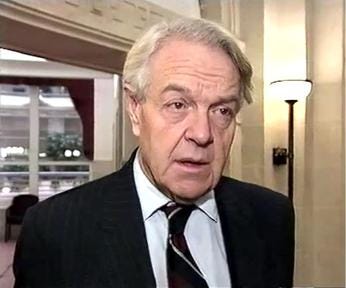
By the 10th of September, attention shifted to changes within the Northern Ireland Office itself. A ministerial reshuffle saw Nicholas Scott promoted to Minister of State and Deputy Secretary of State, while Peter Viggers replaced Rhodes Boyson at Economic Development. That same day, the political turbulence was mirrored in the security sphere: a contractor in Derry announced it would no longer undertake work for British security forces after receiving a threat from the INLA.
The violence that underpinned so much of public life surfaced again on the 16th, when UUP and DUP MPs attended the funeral of John Bingham, a prominent UVF member. Bingham had been shot dead two days earlier by the IRA, who claimed he had orchestrated recent killings of Catholic civilians. His funeral became another moment where political and paramilitary worlds overlapped.
Two days later, the British and Irish governments jointly established the International Fund for Ireland. Backed initially by £36 million, most of it from the United States, with contributions from Canada, New Zealand, and later the European Community, the fund aimed to stimulate economic development in Northern Ireland and the border counties of the Republic, offering a rare note of international cooperation amid domestic discord.
Unionist resistance to the Anglo-Irish Agreement continued to dominate local politics. On the 23rd of September, UUP and DUP councillors met separately and agreed to maintain their protests within council chambers, though they again rejected the idea of mass resignations. The following day, party leaders James Molyneaux and Ian Paisley formally called off the ‘rates strike’ they had announced in April, advising supporters to pay the outstanding amounts in full.
The political temperature rose again on the 25th, when Molyneaux revealed a leaked Department of the Environment document outlining proposed changes to government policy on the Irish language and the use of Irish street names, an issue that touched directly on identity, culture, and the contested symbolism of public space.
The month closed on the 29th of September with Amnesty International calling for a full judicial inquiry into disputed killings in Northern Ireland, underscoring the human rights concerns that ran parallel to the political and paramilitary struggles of the period.
Tales of the Troubles is a reader‑supported publication. Thousands read it — but only subscribers get every instalment, every detail, every story as it lands. Don’t be the one hearing about it second‑hand.
Shootings in September 1986
September 10th.
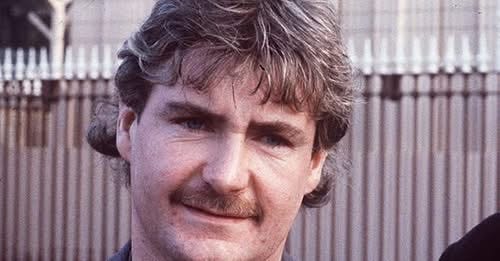
The IRA shot and killed David McVeigh (37) in Lurgan. The IRA claimed he had been a member of their organisation but had become an informer in 1982 after he was arrested in connection with the bombing of Lurgan Golf Club.
September 11th.
The IRA launched a gun and rocket attack on RUC headquarters on the Strand Road in Derry.
September 14th.
High-ranking UVF member John Bingham (33) was shot and killed by the IRA at his home in Ballysillan, Belfast. Two IRA men, armed with a rifle and a revolver, used an axe to smash down his front door before shooting him in both legs. The UVF man managed to make his way to an upstairs bedroom before being shot three more times. The IRA later released a statement saying: “Relying on accurate intelligence reports, we were able to pinpoint the whereabouts of UVF murder-gang leader John Bingham, who after a period of intensive activities which resulted in the deaths of five innocent Catholics, had just in the last number of weeks felt safe to return home.”
An RUC foot patrol came under fire from the IRA in West Belfast.
IRA volunteer James McKernan (29) was shot and killed by the British Army in Brenda Park, Belfast. He had been fleeing a British Army patrol after planting a booby-trap bomb nearby.
September 16th.
The Protestant Action Force claimed responsibility for shooting dead Catholic civilian Raymond Mooney (33) in the grounds of Holy Cross Roman Catholic Church on the Crumlin Road in Belfast. This was claimed as retaliation for the killing of UVF member John Bingham two days before.
September 17th.
The Protestant Action Force claimed responsibility for shooting dead Catholic civilian Joseph Webb (28) in Smithfield, Belfast.
If you’d like to support the newsletter, why not buy me a ☕️ ?
Bombings in September 1986
September 2nd.
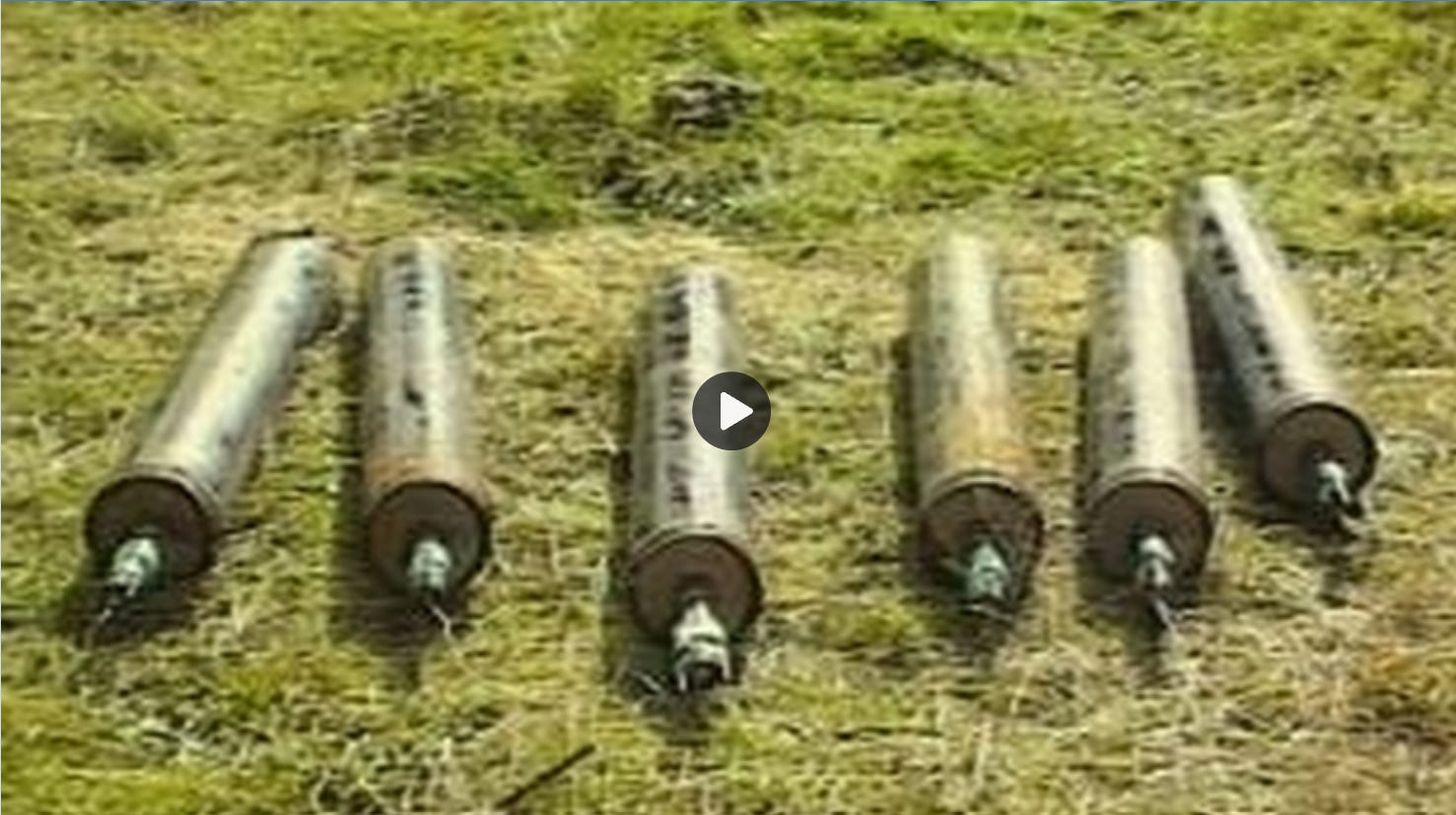
Gardaí foiled an IRA mortar attack near the border. Special Branch Patrol from Dundalk discovered a van loaded with six large homemade mortars with holes cut in the roof.
September 12th.
An IRA bomb planted under a car fatally injured Kenneth Robinson (30) in Derry. The intended target was his father, a part-time member of the UDR.
September 22nd.
A 50 lb (23 kg) INLA bomb left outside the British Legion hall in Killyleagh, County Down, was defused by the British Army.
September 28th.
The INLA claimed responsibility for a 40 lb (18 kg) bomb planted outside a pub in Downpatrick, County Down, which they alleged served off-duty members of the security forces. An RUC officer carried the bomb to a field about 80 yards (73 m) away, where it exploded after 15 minutes. Later, the RUC intercepted a three-car convoy carrying bombs nearby and four people were arrested. One car exploded as a British Army bomb disposal team attempted to defuse it, and another escaped after crashing through the checkpoint and being fired on by RUC officers.
The INLA claimed responsibility for bomb alerts in three towns in Northern Ireland. Although hundreds were evacuated, they were determined to be hoaxes by British security forces.
Thanks very much for reading. I hope you found it interesting and will come back on Tuesday!
I appreciate everyone who recently clicked the heart icon ❤️ at the bottom. It makes it easier for others to find this newsletter.
Thanks for the support!
If you’d like to let me know what you think of today’s instalment, please comment below.
Some recommended reading based on research for this instalment.
Lost Lives: The Stories of the Men, Women and Children Who Died as a Result of the Northern Ireland Troubles by David McKittrick, Chris Thornton, Seamus Kelters and Brian Feeney.