September 1981: Constitutional Crusade

September 1981 saw Uruguay’s Ruling Council name Gregorio Álvarez as transitional President. We also saw changes in Northern Ireland, with a new Secretary of State appointed.
Political Developments in September 1981
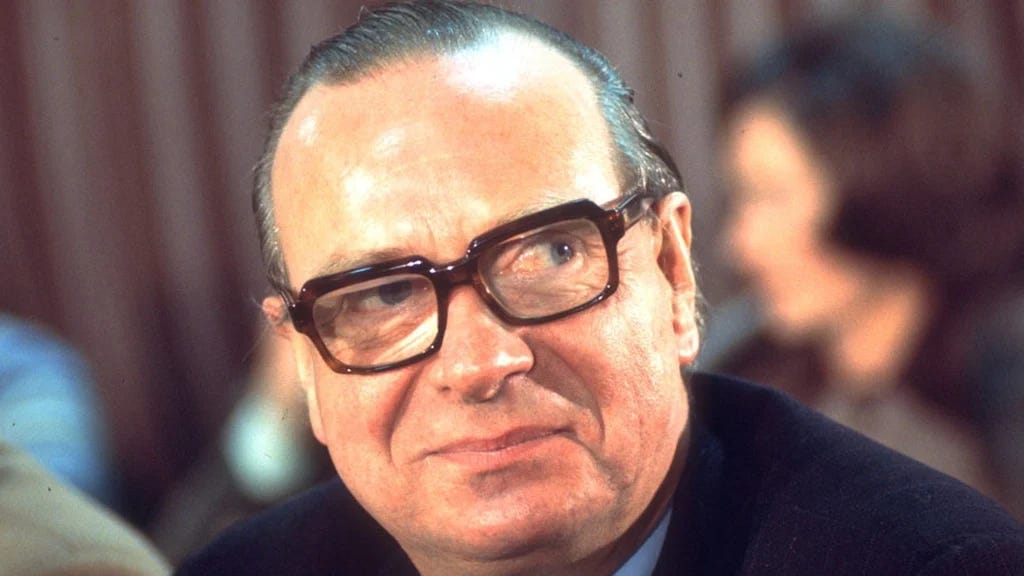
September began with the opening of Northern Ireland’s first religiously integrated secondary school, Lagan College. The integrated school movement was mainly driven by parents’ desire for schools that would provide opportunities for greater cross-community contact among young people.
On the 2nd, DUP leader Ian Paisley called for the establishment of a ‘Third Force’ along the lines of the disbanded Ulster Special Constabulary (’B-Specials’). Paisley envisaged a legal Loyalist paramilitary group which would be used to counter the IRA and other Republican paramilitary groups.
The 4th and 6th respectively saw 2 hunger strikers end their protest. The family of Matt Devlin, then on day 52 of his hunger strike, intervened and asked for medical treatment to save his life. Then, 2 days later, the family of Laurence McKeown, then on day 70 of his hunger strike, intervened and asked for medical treatment to save his life. The INLA issued a statement saying that it would not replace men on hunger strike at the same rate as before. At this stage, the INLA had only 28 prisoners in the Maze Prison compared to the IRA, which had approximately 380 prisoners. Catholic Bishop of Down and Connor Cahal Daly called on Republican prisoners to end the hunger strike.
The 6th also saw a meeting between the Secretary of State for Northern Ireland and the Irish Prime Minister, Senator J Dooge.
The Secretary of State saw Professor Dooge for half an hour at 0900 hrs on 6 September.
SDLP
Professor Dooge was worried about the position of the moderate centrist parties in Northern Ireland as the hunger strike progressed. The SDLP was slipping badly and losing activists to the anti-H-block movement. He wondered whether anything could be done to arrest this trend. Could proportional representation be considered in Northern Irish constituencies to the Westminster Parliament? The Tyrone/Fermanagh by-election had been a disaster for the SDLP, who had stood aside, expecting that Carron would lose and not wanting to be accused of splitting the nationalist vote and so causing his defeat. Under proportional representation, they would not have had this worry. Lord Carrington pointed out the problems.
Baton Rounds
Professor Dooge said that baton rounds had caused ten fatalities, where rubber rounds had been abandoned for causing only three. 13000 of them had been fired this year, and given the pressure on the security forces, it was inevitable that the rules for their use should sometimes be disregarded. Injuries to children were particularly embarrassing to the Irish Government, as was Mr Whitelaw’s statement that baton rounds would not be used in Great Britain. Unless the situation improved, the Irish Government might have to express its concern publicly. He would set the Irish Government’s worries out more fully in a note. Lord Carrington said that baton rounds would not be used in Great Britain because policemen and soldiers were not being killed here. The problem was that there was no substitute for baton rounds. But observation of the rules governing their use would be looked at.
H-Block
Professor Dooge said that recent signs that a wedge was being driven between the PIRA and the hunger strikers’ families were welcome. But the trend would not necessarily continue. The PIRA had recently taken a week to decide on a replacement for one of the hunger strikers. There was no shortage of volunteers; the most likely explanation of the delay was that the PIRA were checking that the family of the man chosen were hard-line Republicans who could be relied on not to weaken. He could see the temptation to the Northern Ireland Office to take a firm line at this stage in the hope that the hunger strike would crumble. But this might, on the contrary, be the best moment to try for an agreement, based on the concessions which the British Government had already indicated that it was willing to contemplate. At present, no concessions were being given to those who conformed or who came off a hunger strike; British insistence that the hunger strike must end totally before any concessions were given to prisoners discouraged hunger strikers from breaking ranks, and strengthened the PIRA’s hold on them.
Northern Ireland and the United Nations
Professor Dooge said that the non-aligned and the Eastern bloc would press the Irish in New York to go for a Resolution on Northern Ireland. The Irish Government faced a by-election campaign in October and November in the seat vacated by Doherty. It could be embarrassing for the Irish Government to be seen to be blocking a Northern Ireland Resolution in New York at such a time. Lord Carrington said that he need not point out the effects that a Northern Ireland Resolution might have on Anglo-Irish relations.
Impact of the Hunger Strike
The Secretary of State asked whether Professor Dooge thought that the hunger strike was still making as much impact on public opinion abroad. Professor Dooge thought that it was. The H-block movement was concentrating its efforts on a few countries, particularly the United States and France. At home, the Irish Government was unable to contain support for the PIRA in the border counties. Despite the increasing return from NORAID, the PIRA was short of money. He accepted that it was difficult for the British Government to make a political move against a background of violence. Though violence was at present being held in check, there would certainly be a fresh outbreak to demonstrate PIRA muscle if the hunger strike ended. He wondered whether the lack of political activity in Ulster was holding things back. Lord Carrington pointed out the problems. Either one returned to the Stormont formula, which had started all the trouble in the first place, or one went for a power-sharing arrangement, on which it had proved impossible for any of the parties to agree.
Professor Dooge made another half-hearted plea for proportional representation, but admitted that in a recent two-day discussion, the Irish Government had been unable to come up with any solutions.
IRA prisoner John Pickering joined the hunger strike on the 7th of September.
There was a further meeting involving the Secretary of State for Northern Ireland the following day. This time, it was with Independent MP Gerry Fitt.
NOTE OF A MEETING WITH MR GERRY FITT MP ON 7 SEPTEMBER 1981
Mr Fitt called at his own request for a brief meeting with the Secretary of State.
BBC Programme
Mr Fitt said he had very recently taped an interview for the BBC TV programme “The Light of Experience”. He had spoken about the hunger strike and the effect it had had on his life. He described his exposition as “dramatic”. He understood that the BBC proposed to let his programme take its turn in the queue before being screened, with the result that it is not likely to be broadcast for some time. The producer and director of the programme were both, according to Mr Fitt, anxious for it to appear as soon as possible, and hopefully this coming Sunday, 13 September. He shared their view and was anxious, therefore, that the Secretary of State should do what was possible to ensure the early appearance of the programme. The Secretary of State said that he would look into the matter; a transcript of the programme is attached.
Hunger Strike
Mr Fitt said that there were now clear signs that support for the hunger strike was breaking up, and he urged the Secretary of State to make no conciliatory moves designed to speed up this process; he believed it was enough for the Secretary of State to let events take their course.
Mr Fitt said he had talked on a number of occasions over recent weeks to a Father Flanagan, who was strongly opposed to the hunger strike and was anxious to encourage priests to voice their opposition. Mr Fitt suggested that recent activity by priests was a result, at least, of Father Flanagan’s activities.
Mr Fitt said that he had been telephoned some two weeks ago by Mr Kelly, the Acting Foreign Minister of the Irish Republic. They had had a long conversation, and Mr Kelly had said he was adopting a robust line with his colleagues against making concessions to the PIRA. Mr Fitt will see Mr Kelly in Dublin on Thursday, 10 September.
Mr Fitt has also been discussing Northern Ireland affairs with two Socialist TDs. Mr N Brown and Mr J Kemmy (the Independent Socialist member for Limerick). Mr Kemmy was elected on an anti-IRA ticket and has been voicing his opposition to the hunger strike. He has, according to Mr Fitt, told the Taoiseach not to count on his continued support in the Dail if the Irish Government continues publicly to criticise the UK Government about the hunger strike.
Mr Fitt is arranging for Messrs Brown and Kemmy to attend the Labour Party Conference and to address a fringe meeting about Northern Ireland. Mr Seamus Lynch would also, at Mr Fitt’s invitation, be addressing a meeting at the Conference. Mr Fitt believes that Mr Owen Carron MP will also be at the Conference and addressing a meeting.
There was a Northern Ireland political review on the 10th of September. In the review, there were quotes of comments made by various political figures.
Carron’s victory was widely deplored. The DUP said that;
“Unionists of Northern Ireland as a whole can only view with alarm and disgust the fact that over 31,000 people came out to vote for Owen Carron, who has consistently supported the actions of the convicted terrorists in the H-Blocks”
The moderate Alliance Party commented;
“Those who voted for him carry a share of the responsibility for continued violence and death”.
Mr Maginnis called Carron’s supporters.
“fellow travellers of the IRA murderers who have gunned down innocent people in this constituency and who murdered our helpers after the last election”.
Gerry Fitt MP (Independent Socialist) also advised Carron to use all the influence he had in the interests of the Ulster people to bring the hunger strike to an end, and added;
“He is the representative of PSF and has influence”
On the 13th, Secretary of State for Northern Ireland Humphrey Atkins was appointed as deputy Foreign Secretary. James Prior was appointed by the British government to take over the post of Secretary of State.
IRA prisoner Gerard Hodgkins joined the hunger strike on the 14th of September.
Recently appointed Secretary of State for Northern Ireland James Prior arrived in Northern Ireland on the 17th of September and went to the Maze Prison, where he had a three-hour meeting with those on hunger strike.
On a day when the SDLP was openly critical of the hunger strike, IRA prisoner James Devine joined the hunger strike on the 21st. SDLP leader John Hume said he had been depressed by the course of events over the past few months and by the Government’s handling of them. He believed the Government had engaged in confrontation, not in politics. In Mr Hume’s view, political progress would be made only if the present basis of direct rule was reconsidered, and in particular if the Government looked again at the guarantee. While the guarantee remained, the Protestants would not consider change. Moreover, the guarantee carried with it an implicit invitation to act in a sectarian way; it had not brought peace and had divided the people of Northern Ireland. Hume said he saw the need to calm the fears of Protestants. In the long run, if a new situation existed in Northern Ireland, majority rule could be satisfactory, but that situation had not yet been reached. A call by Loyalists for an independent Northern Ireland would in some respects be welcome: it would show a new approach, and from it might emerge the idea of a loose federation of Ireland, North and South.
That same day, the Troubles took centre stage in the Commonwealth Heads of Government Meeting in Melbourne.
THIS DOCUMENT IS THE PROPERTY OF HER BRITANNIC MAJESTY’S GOVERNMENT
CURRENT SITUATION IN NORTHERN IRELAND
Brief by Northern Ireland Office
POINTS TO MAKE
Northern Ireland is a part of the United Kingdom simply because a clear majority of its citizens want it to be.
The present Government, like its predecessors, continues to try to find ways of enabling the people of Northern Ireland to have more responsibility for their own affairs.
Ten men have died so far in the hunger strike, which continues at the Maze prison. But terrorism continues too: since the hunger strike began on 1 March 1981, 27 members of the Army and the police force and 32 civilians have been killed. Our determination to enforce the law against all who break it remains unshaken.
The hunger strikers and those directing them have rejected appeals to desist (including one from the personal emissary of the Pope) and have rejected opportunities to take their case to international bodies such as the European Commission of Human Rights.
Mr Owen Carron’s election as MP for Fermanagh and South Tyrone should not be taken as substantial popular support for the hunger strike or the IRA. Carron undoubtedly attracted support from many voters whose prime concern was to prevent the election of a Unionist, rather than to express support for his particular kind of extreme Nationalism.
The Government hope to improve the already excellent regime at the prison when the hunger strike ends, but not under duress. They will not grant the prisoners’ five demands, amounting to political status or otherwise concede control of the prison to dangerous convicted criminals.
If pressed, the British Government is aware that Mr O’Connor, who went to Australia from the Republic of Ireland about 8 years ago, recently went on hunger strike for 39 days in Sydney. He ended his fast after appeals from Cardinal Freeman, head of the Roman Catholic Church in Australia.
BACKGROUND INFORMATION
Because of the number of Australians of Irish descent, there is substantial interest in Australia in the problems of Northern Ireland, and some vocal opposition to British policy there. Recently, a Mr O’Connor pursued a hunger strike for 39 days in Sydney, in order to persuade the Australian Government to press the UK to concede the IRA prisoners’ five demands. He claims that he ended his fast after receiving a message from IRA sources in Ireland, but there had also been public appeals by Cardinal Freeman, and he had been visited by his family, who travelled from Dublin.
The Australian Government has made clear that it regards the affairs of Northern Ireland as entirely for the British Government. Neither it nor any other Western government (including the Republic of Ireland) has asked the Government to concede five demands.
The 400 protesting prisoners at the Maze Prison were all convicted in open court of serious offences which would have earned them substantial punishment in any jurisdiction (74 were convicted of one or more murders, 45 for attempted murder, 118 for explosives offences). Nobody in Northern Ireland’s prisons is detained other than by order of a court: there is no administrative detention without trial. Because terrorist organisations have shown that they are able to intimidate juries, trials for terrorist offences are conducted by a single judge without a jury. But all other normal safeguards for the accused, including strict rules of evidence, continue to apply, and those tried in such a way (unlike those convicted by a jury) have an unfettered right of appeal.
The prisoners’ demands are;
(i) To wear own clothes at all times.
(ii) Not to do prison work.
(iii) To associate freely in their wings with all doors open.
(iv) To have more visits, letters and parcels.
(v) Restoration in full of remission lost for bad behaviour.
While the five demands are couched in terms of improvements in the regime, they amount in reality to a wholly new regime which would give the prisoners an unacceptable degree of control over the prison, and would enable them to claim with considerable justification that they were political prisoners or PoWs. That is why they cannot be conceded. At present, prisoners who conform to prison rules may wear their own clothes in the evening and at weekends, and may have more visits, letters and parcels.
Prisoners ceasing to protest may have some remission restored to them after a period of good behaviour. There is controlled association in the evening and virtually all day at weekends, and a wide variety of work, though decisions on allocation must be for the prison authorities. The Government is committed to further improvement in this already liberal regime in due course, but such improvements will not come near to meeting the five demands.
So far, ten hunger strikers have died (the first was Mr Robert Sands, who shortly before his death was elected as MP for Fermanagh and South Tyrone). Five have ended their fast, one on health grounds and four as a result of their families asking the doctors to provide treatment (they continue to take nourishment). Seven hunger strikers continue, though the Irish National Liberation Army have said that for the immediate future, none of their members will take part.
Regrettably, violence this year associated with the hunger strike has been on a higher level. Last year showed the lowest level for a decade. As the terrorists no doubt intend, violence has also made it more difficult to find ways of giving the people of Northern Ireland more say in their own affairs. Efforts to find agreement between the NI parties on a degree of devolved government have so far not succeeded. The Secretary of State announced in June the intention to establish a Northern Ireland Council, as a forum for discussion and advice to the Secretary of State, who operates direct rule. It would be composed of nominated members of district Councils, NI MPs and MEPs. Discussions about setting up this body continue.
In another story, the mother of hunger striker Liam McCloskey, who was approaching death, wrote to British Prime Minister Margaret Thatcher, asking for a meeting. Below is the Prime Minister’s reply.
Dear Mrs McCloskey,
Thank you for your letter of 1 September.
I have indeed received it personally and read it, I hope, with true understanding. I do care very deeply about those to whom the hunger strike has brought pain and bereavement, as I do for all those in Northern Ireland who have suffered from violence in whatever form that has taken.
You ask if you can come and see me. I hope you will understand that I really do not mean to disappoint you and Mrs Lynch, but I am afraid I do not see how such a meeting could help. I believe myself that the Government’s position has already been set out very clearly. But my officials are, nevertheless, ready to explain it again carefully to anyone to whom that would be of value. That, of course, extends, before anyone else, to the families of the hunger strikers. If that would be of any help to you, then it can be done with all speed. But the fact is that the hunger strikers have no more to gain for themselves by carrying on. I think many people now do understand this. It is my hope that those whom the hunger strikers trust will say so to them and that my writing to you will help you to do so.
Yours sincerely,
Margaret Thatcher.
Bernard Fox, then on day 32 of his hunger strike, ended his fast on the 24th of September. Fox’s condition had deteriorated quickly, and Sinn Féin was reported as having said that he was ‘dying too quickly’. Liam McCloskey, then on day 55 of his hunger strike, also ended his fast on the 26th of September. McCloskey’s family had said that they would call for medical intervention to save his life if he became unconscious.
The 27th of September saw Irish Prime Minister Garret FitzGerald give an interview on Radio Telefis Éireann and set out his vision for a new Republic of Ireland in what became known as his ‘constitutional crusade’. The main theme of his ideas was to make the Republic of Ireland a society where the majority ethos would be expressed in a way to not alienate Protestants living in Northern Ireland.
At the British Labour Party’s annual conference on the 29th, a motion was passed committing the party to ‘campaign actively’ for a United Ireland by consent.
Tales of the Troubles is a reader-supported publication. Join hundreds of subscribers and get every instalment straight to your inbox 3 times a week.
Shootings in September 1981
September 5th.
Off-duty British soldier Sohan Virdee (20) was shot and killed by the IRA shortly after being lured to a house in Stranmillis Park in Belfast.
The INLA opened fire on an RUC patrol investigating a robbery in East Bridge Street, adjacent to the Market area of Belfast.
September 10th.
An INLA ambush on British security forces at the junction of Rosnareen Park and Shaw’s Road, Belfast, was aborted after a vehicle patrol failed to appear.
September 12th.
Off-duty UDR soldier Alan Clarke (20) was killed in an IRA gun attack while walking along Hall Street in Maghera, County Londonderry.
September 14th.
Off-duty RUC officer John Proctor (25) was shot and killed by the IRA while leaving Magherafelt Hospital.
September 19th.
The UVF shot and killed Catholic civilian Eugene Mulholland (25) on Ormeau Road, Belfast.
September 26th.
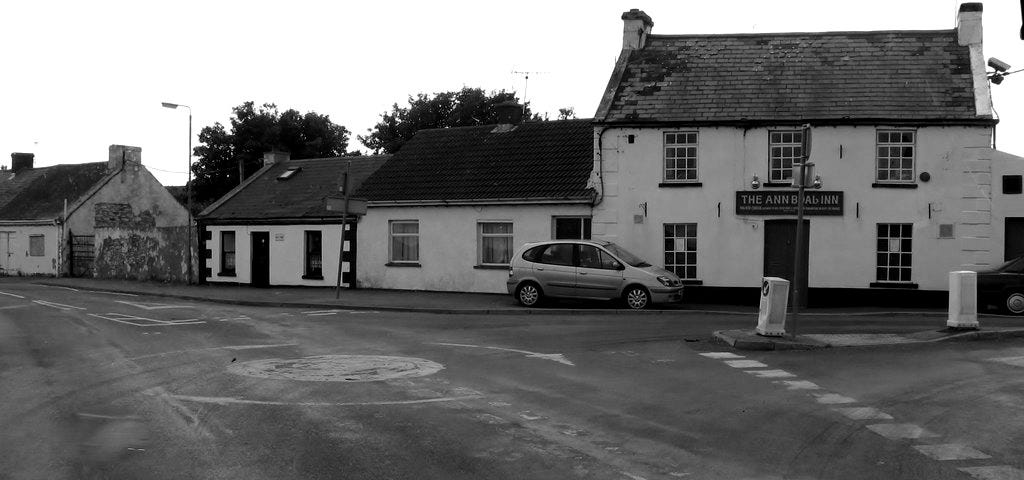
Off-duty RUC officer George Stewart (34) was shot and killed by the IRA while inside the Ann Boal Inn in Killough, County Down.
September 27th.
Catholic civilian Anthony Braniff (27) was found shot in an entry off Odessa Street in the Falls area of Belfast. It was alleged that he was an informer.
September 29th.
The INLA shot and killed off-duty UDR soldier Mark Stockman (20) shortly after he left his workplace, Mackie’s factory on the Springfield Road, Belfast. Another UDR soldier was injured. Undercover RUC officers waiting in ambush chased the attackers, and fire was exchanged, but the INLA unit escaped.
If you’d like to support the newsletter, why not buy me a ☕️ ?
Bombings in September 1981
September 7th.
RUC officers Mark Evans (20) and Stuart Montgomery (19) were killed when their patrol vehicle struck an IRA landmine at Sessadonaghy, near Cappagh in County Tyrone.
September 28th.
RUC officer Alexander Beck (37) was killed in an IRA rocket attack on a British patrol on the Glen Road in Belfast.
Thanks very much for reading. I hope you found it interesting and will come back on Sunday!
I appreciate everyone who recently clicked the heart icon ❤️ at the bottom. It makes it easier for others to find this newsletter.
Thanks for the support!
If you’d like to let me know what you think of today’s instalment, please comment below.
Some recommended reading based on research for this instalment.
Lost Lives: The Stories of the Men, Women and Children Who Died as a Result of the Northern Ireland Troubles by David McKittrick, Chris Thornton, Seamus Kelters and Brian Feeney.