May 1981: Brain Function

May 1981 saw the opening of the Ukrainian Motherland Monument in a ceremony attended by Soviet leader Leonid Brezhnev. In Northern Ireland, the death of a hunger striker became a symbol for revolution amongst Nationalists.
Political Developments in May 1981
May continued to have a huge amount of things going on, similar to what we had seen in April. It began with the European Commission on Human Rights announcing on the 4th that it had no power to proceed with the case brought against the British government by Marcella Sands, the sister of Bobby Sands. The case had been announced on the 23rd of April 1981.
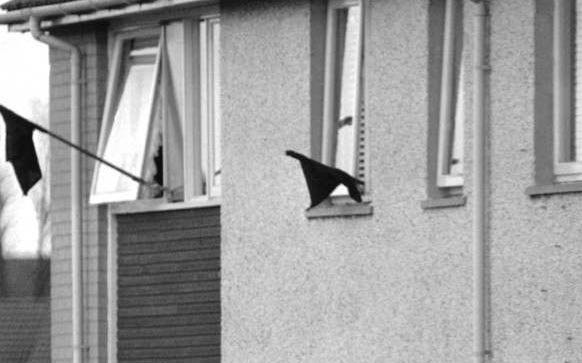
The following day, after 66 days on hunger strike, Bobby Sands (26) died in the Maze Prison. The announcement of his death sparked riots in many areas of Northern Ireland, but also in the Republic of Ireland. The IRA also stepped up its attacks on members of the security services. Following the death of Sands, the British government faced extensive international condemnation for the way in which it had handled the hunger strike. The relationship between the British and Irish governments was also very strained.
On the 6th of May, the British government sent an additional 600 troops to Northern Ireland. This coincided with the INLA claiming that a pair of Catholic priests had attempted to disarm an INLA volunteer on “active service” in Derry, following the shooting of an RUC officer. The named priest denied the INLA allegation, stating it was a “total fabrication”.
That same day, there was a memorandum containing the views of the General Secretary of the UUP, Norman Hutton, on the recent political developments in Northern Ireland.
NORMAN HUTTON
Summary
In a recent conversation, Norman Hutton (UUP General Secretary) made the following main points of interest:
(i) He believed that the planned centrepiece of phase 3 of Paisley’s “Carson trail” was the symbolic occupation of various public buildings. especially the NIHE headquarters and Chichester House. However, the DUP had so far been unable to implement these plans;
(ii) He was highly critical of the Rev Robert Bradford MP, who had little sense of party loyalty and was temperamentally closer to the DUP;
(iii) In the next Fermanagh and South Tyrone by-election, Hutton judged that the UUP constituency association would once again go for Harry West as their candidate, on the grounds that he had done as well as could reasonably be expected on 9 April.
Details
I had lunch late last week with Norman Hutton. who was appreciably more cheerful about UUP prospects in the forthcoming local government elections. Glengall Street were particularly pleased at the neat way in which Harold McCusker MP had turned the visit of the ECHR Commissioners to advantage by getting them to accept a complaint from a UUP “war widow”, although the work which McCusker’s “European Human Rights Unit” had generated was placing some strain on resources. In addition, Hutton judged that the Party as a whole was recovering its nerve following Paisley’s apparent failure to capitalise on the relative success of “phase 2” of his Carson trail. When I commented that for electoral purposes the Carson trail certainly seemed to have peaked too soon, Hutton said that he understood that Paisley’s plans for “phase 3” had included the symbolic occupation of Government buildings like Chichester House and the NIHE headquarters in Adelaide Street (particularly the latter, to dramatise objections to Poleglass, etc), but he had been unable to implement these so far. Hutton seemed to have gathered this from political contacts; although he commented that it was on the RUC’R’ net that he had heard details of Paisley’s first hillside spectacular on 5/6 February - eg that the “firearm certificates” waved by the demonstrators were in fact pieces of paper from a House of Commons notepad. Hutton went out of his way to stress to me the sense of responsibility which Molyneaux was displaying in the present volatile situation, contrasting with Paisley’s inflammatory and headline-seeking behaviour.
The topic of responsibility in politics led on to a discussion of Robert Bradford, whom Hutton felt concentrated so exclusively on wooing the “hard” Loyalist vote in his South Belfast constituency that he sometimes sounded merely like a “DUP echo”. (As an example of his lack of balance, he instanced the fact that Bradford’s advice centre was not in the Malone Road but in the tough Cregagh area!) Hutton commented that a large proportion of Bradford’s 1979 election expenses had been contributed by wealthy DUP supporters - particularly a man called Foster in Castlereagh. If Bradford had to face a re-selection meeting in the near future, he would certainly not retain the UUP nomination. (It was clear from Hutton’s comments that Bradford’s continuing and somewhat crude attempts to position himself for a bid at the leadership after the May elections have seriously alienated the Glengall Street establishment.)
On the Fermanagh by-election, Hutton remarked that West had emerged as the candidate partly because of a DUP “whispering campaign” against Raymond Ferguson, the UUP runner in 1979. The DUP had suggested that Ferguson was “soft on Nationalists” because he had not walked with his Lodge on the last 12th July and had voted in the Council in favour of a civic reception for the Catholic athlete Declan Burns. However, Hutton did not believe that Ferguson could have polled any more strongly than West.
Hutton made a number of miscellaneous comments, of which the following perhaps deserve to be recorded -
(i) He was still sore about the RUC’s retraction early this year of their denial that the police had notified Paisley of a UUP threat to his life. He commented darkly that Strandtown RUC Station (who originally warned Paisley without telling RUC HQ) was “too much in Paisley’s pocket”.
(ii) He was currently in dispute with the BBC over local election coverage. The Corporation wished to give equal coverage to every party who were fielding more than 26 candidates, whereas Hutton believed that the coverage should be proportional to the number of candidates each party was running. (The UUP are of course, running most.) He commented that if he could not get satisfaction, he would make sure that the UUP were not covered at all, so that the BBC (on whom the legal obligation of ensuring balance fell) would be forced to scrap their plans for all the other parties.
(iii) On the mood of the hard Loyalist areas, he believed that there was little danger of the Loyalist paramilitaries taking violent action unless HMG showed signs or giving in to the hunger strikers. I assured him that this would not happen.
Conclusion
It was paradoxical earlier this year that the by no means unqualified success of “phase 2” of the Carson trail seemed to inflict disproportionate damage on UUP morale: there was a widespread impression that the DUP would sweep the board in May. As Hutton’s remarks show, this impression is now receding - probably because the damaging contrast between Paisley’s frenetic activity and the passivity of the UUP under Molyneaux has now to some extent been reversed - the Carson trail seems to have petered out while the UUP has seized the initiative on matters of more immediate concern - e.g., the ECHR coup. The firmness of the Government’s handling of the hunger strike has shown up the irresponsibility of Paisley’s attempts to whip up another crisis.
Moreover, Molyneaux has wisely let the more able McCusker (now almost fully recovered from his recent operation for cancer of the leg) make much of the running. My present forecast would therefore be that although the DUP will almost certainly gain some seats, the UUP will not be replaced as the largest Unionist party at local government level. However, much could still happen to change the position before 20 May.
An estimated 100,000 people attended the funeral of Bobby Sands in Belfast on the 7th of May. The size of the crowd reflected the impact the hunger strike was having on the Nationalist community in Northern Ireland.
On the day of Sands’ funeral, there was another weekly bulletin from the Northern Ireland Office. From the documents, there is an interesting section that discusses the current state of affairs within the prison in relation to what was going on outside.
Prisons Assessment
The major development in the prisons was, of course, the death of Bobby Sands. However, in contrast to events outside the prison, this has so far not produced any significant reaction within the institutions, an absence which is in keeping with the prisoners’ current policy, which we believe they still intend to maintain. The solidarity action which has taken place has been very low-key. As for likely developments, there is evidence of some tension in the prisons, reflecting the situation outside, but no firm intelligence has emerged as to any radical change in prisoners’ attitudes. The reports, given some press publicity, that 70-80 protesters were preparing to join the hunger strike, have an air of credibility - with the worldwide press interest and the imminence of another death, such action could be thought to be a useful further turn of the screw and was, of course, undertaken last time. There must also be some pressure within the prisons for action to support the campaign outside, but no corroboration has so far been obtained for these particular press reports. Finally, the hunger strikers confirmed in the press statement, noted above, that they intended to continue their fasts and all have maintained a front of determination. Whether all 3 and particularly O’Hara will go the distance, remains, however, to be seen.
On the 8th of May, IRA prisoner Joe McDonnell joined the hunger strike to take the place of Bobby Sands.
The Anglo-Irish Studies: Institutions released a memorandum the next day, outlining unionist reaction to proposed “institutional structures”.
ANGLO-IRISH JOINT STUDIES: INSTITUTIONS
You asked for an assessment of the likely Unionist reaction to the sort of proposals on “institutional structures” circulated with the Cabinet Office minute of 29 April.
General Unionist feeling would, of course, be against any proposals on these lines. As a result of the Dublin summits and the secrecy surrounding them, Unionists suspect that a sell-out is taking place behind their backs. Their suspicions have been fanned by Mr Paisley and the ambiguous statements of Mr Haughey and Mr Lenihan. Even Unionists who are prepared to believe Ministers when they say that the Government is determined to uphold the constitutional position have a sneaking fear that the Prime Minister has been unwittingly drawn onto a slippery slope towards a united Ireland by the wily Mr Haughey.
The key factor for Unionists - “moderates” as well as DUP - is that while they are willing to talk to the South as good neighbours over the garden fence (and a great deal of business goes on daily without publicity), they will not tolerate anything which smacks of supra-national arrangements or which might give Southern politicians a standing to interfere in the affairs of the North. For them, the biggest sticking point in the proposals on “institutional structures” would probably be the resurrection of the term “Council”, a word which has heavy overtones in the North. (There are, of course, advantages in the term: it suggests an ongoing activity with room for growth (which is why the Unionists dislike it), and this may be one of the things which Ministers hope to achieve from the “unique relationship”). Alternatives could be “Council for Co-operation” or perhaps “Commission”, a term favoured in the model treaty attached to the European Outline Convention on Transfrontier Co-operation (which the Dublin Government have signed and ratified - we have done neither). Unionists would also greatly dislike the proposals for a Parliamentary Assembly, proposals which would probably be going too far at this stage. Less objectionable, but not easily acceptable for Unionist opinion, would be proposals for a Joint Secretariat and specific mention of a North-South dimension.
Mr Paisley and his colleagues are bound to react sharply to any proposals on institutional structures: not only on principle, but because they have a major political interest in raising an outcry. The important factor would be the reaction of other Unionists - and it is not easy to forecast the result of a determined effort by Mr Paisley and his friends to stir them up. Nevertheless, our view is that their reaction should be manageable, though timing and presentation would be important. As regards timing, present conditions are arguably as favourable as they are likely to be in the foreseeable future. The Government’s firmness in the face of the hunger strike, its determination to take adequate security measures and the success of those measures so far have, for the present, gained the grudging approval of Unionists. With luck, this approval should last until July, the earliest date at which the proposals for institutional structures would seem likely to be made public. The results of the local elections on 20 May should enable us better to assess how the wind is blowing.
It would be important to persuade the Dublin Government and the SDLP not to claim in public that a major nationalist victory had been won, and to hold them firmly to the position that the axis of the new institutions was Dublin/London, not Dublin/Belfast. Emphasis on the latter point could do much to still and counter Unionist protests. It would also help sidestep charges that the· Government was selling Unionists out behind their backs. Other points could also be made to Unionist opinion at the time the proposals were made public, for example:
(a) That the constitutional guarantee remained valid;
(b) That the proposals concerned institutional, not constitutional arrangements;
(c) That a considerable body of North/South and East/West co-operation already existed; and
(d) That the new arrangements were being pursued in the interests not just of the people of Northern Ireland, but of the 55 million people who live in Great Britain.
We should also take into account the implications of any undue weakening of the proposals for the minority community and the Dublin Government. For the latter, the proposals presumably form an essential part of the Joint Studies; and the Joint Studies make it easier for the Government in the South to continue security co-operation across the border and to keep comparatively silent over issues as the hunger strike. Inside Northern Ireland, any apparent weakening of intent on our part would make it more difficult for moderate Catholic politicians (some of whom already know what is afoot through the Dublin Government) to resist the already strong pressure on them from the “green” end of the spectrum. It would make it more difficult for us (and moderate Catholics) to convince nationalists in the North that they can pursue their goals by non-violent means. On a wider front, it would mean a severe check to the only constructive political move (the Joint Studies) at present on the table. At a time when the Government is unpopular in some sections of the Catholic community for its alleged inflexibility over the hunger strike, we need to encourage Catholics into political co-operation, not give the impression that they are being punished for their instinctive sympathy with Sands.
Your minute asked simply for an assessment of the likely Unionist reaction to the proposals. We should perhaps also ask to what degree we should allow ourselves to be influenced by the possibility of unfavourable reactions. If we restrict ourselves to agreeing proposals which are likely to cause the minimum offence to Unionists, we rule out any possibility of changing the dimensions of the “Irish problem” or of opening the way to a course which might offer the prospect of alleviation and ultimately, perhaps, even a solution. Nor will we thus achieve the “unique relationship” between the UK and the Republic which Ministers believe to be desirable on other (i.e., non-Northern Ireland) grounds. In other words, Ministers are not going to reap the benefits for the sake of which they decided to embark on the Joint Studies, unless they are prepared to offend Unionist opinion. Para 4, above, attempts to set out which proposals would provoke most Unionist opposition.
In sum, therefore, we believe there are strong arguments in favour of proceeding with the sort of proposals for institutional structures which are now under consideration. Though Protestant extremists would hotly attack them, and most other Unionists would regard them with suspicion, they should not provoke unmanageable opposition. Timing and presentation would be important.
Mr Bell, Mr Blelloch and Mr Wyatt agree broadly with this assessment.
After 59 days on hunger strike, IRA prisoner Francis Hughes (25) died on the 12th of May. Hughes’ death led to a further surge in rioting in Nationalist areas of Northern Ireland, particularly in Belfast and Derry. In Dublin, a group of 2,000 people tried to break into the British Embassy.
In advance of John Hume’s meeting with the Prime Minister on the 13th, notes were prepared for the Prime Minister. From these notes, there were concerns about further reaction and violence in the Catholic communities.
The possible reaction of the Catholic community to further deaths of hunger strikers is worrying. What reaction does Mr Hume expect? Will it last? Could it result in wider general support for the Provisionals? How can we prevent an alienation of the Nationalist community, apart of course from giving in to the Provisionals’ demands?
There was also a document about a call between the Irish Prime Minister’s office and 10 Downing Street raising similar concerns around the balance of power in Fermanagh.
Michael Alexander at No 10 telephoned me at lunchtime to report a conversation he had had with Dermot Nally in the Taoiseach’s office. The Taoiseach is concerned that the population of Fermanagh is “completely under the control of the Provisionals” and that in any early election in the Republic, up to six seats could go to Provisional sympathisers. Circumstances could arise where such a group held the balance of power.
On the 13th, SDLP leader John Hume travelled to London to meet British Prime Minister Margaret Thatcher as planned. Hume asked Thatcher to concede to the hunger strikers’ demand for free association and the right to wear civilian clothes. No concessions were forthcoming from Thatcher.
The following day, IRA prisoner Brendan McLaughlin joined the hunger strike to replace Francis Hughes, who had died on the 12th of May. McLaughlin would later be taken off the strike on 26 May 1981 when he suffered a perforated ulcer and internal bleeding.
There was an update on Raymond McCreesh’s hunger strike on the 16th.
NOTE FOR THE RECORD
HUNGER STRIKE 2 - RAYMOND MCCREESH
On Saturday, 16 May, Raymond McCreesh was on day 56 of his hunger strike. He was confined to bed and was described by the doctors as in a confused and disorientated state of mind as to time, place and person.
At around 6 pm, he had a conversation with the Prison Hospital Officer, SO Nolan, and in the course of that conversation, said that he would take a drink of milk. Mr Nolan contacted the doctor on call (Dr Emerson) and asked him to come in to the prison to see McCreesh.
On arrival, Dr Emerson found McCreesh in a confused state of mind, but despite this gave an affirmative answer to the question from the doctor, “Do you want me to save your life?”
Dr Emerson did not regard this answer as sufficient to authorise medical intervention in view of the mental state of the patient and took two steps to have the matter clarified. He asked for the family to be brought to the prison and also contacted Dr Bill in the absence of Professor Love in England.
The family (mother, sister, brother and priest/brother) arrived at about the same time as Dr Bill (around 9 pm).
Dr Emerson explained to the family that McCreesh was very confused but had asked for milk and medical resuscitation.
The family then saw McCreesh, and the following conversation between the priest/brother and McCreesh was overheard.
“Q: Where are you?
A: I am in hospital in Scotland.
You are not in hospital in Scotland, you are in Long Kesh Concentration Camp.
(Later) Your brother and I were proud to carry the coffins of Bobby Sands and Francis Hughes - they are in heaven now waiting for you.”
2 days later, there was a note surrounding the discovery of a camera being found in McCreesh’s bed.
REF: PRISONER 354/77 McCREESH - HUNGER STRIKER
I have to report that at 1835 hours on 16 May 1981, a Rollei Miniature Camera was found in the prisoner’s bed in the Prison Hospital. The circumstances were that McCreesh asked the Hospital Staff to find his rosary beads among his bedclothes. When the clothes were pulled back, the camera was laying by his right elbow.
It can only be speculation as to who left the camera in his bed, but it is significant that three members of his family visited him in mid-afternoon that day, and all bent over and embraced McCreesh before leaving. The intention was presumably to obtain a picture of McCreesh on his deathbed.
The film, of a foreign make, is with Special Branch and cannot be developed for several days. However, it is not thought that any shots were taken. The camera, valued by the RUC at £128, is with the Steward for safekeeping.
Local government elections were held in Northern Ireland on the 20th of May against the backdrop of the continuing hunger strike. In the increased tension in the region, ‘moderate’ parties all suffered a decline in support. The DUP achieved 26.6 per cent of the vote compared to the 26.5 per cent recorded by the UUP. The SDLP obtained 17.5 per cent of the first preference votes compared to 20.6 per cent in 1977.
On the 21st of May, Raymond McCreesh (24) and INLA prisoner Patsy O’Hara (23) both died, having spent 61 days on hunger strike. Catholic Primate of Ireland Tomás Ó Fiaich criticised the British government’s attitude to the hunger strike.
IRA prisoner Kieran Doherty joined the hunger strike the next day.
That same day, British Prime Minister Margaret Thatcher replied to Tomás Ó Fiaich.
HUNGER STRIKE: MESSAGE TO THE CARDINAL
Your minute of 21 May asked me to think about a possible message to Cardinal Ó Fiaich. The Cardinal has since let loose another shaft (copy attached), which reinforces the case for action on our part.
I submit a self-explanatory draft from the Prime Minister together with a draft covering letter to No 10. I have tried to bring out elements of reassurance for the Catholic community and to butter up the Cardinal. I have not inserted the idea that the influence of the Church is the key to progress, but it is latent in the concept of consulting the Cardinal, anyway.
DRAFT LETTER FROM PS/SECRETARY OF STATE TO PS No 10
HUNGER STRIKE: MESSAGE FROM THE PRIME MINISTER TO CARDINAL Ó FIAICH
The Prime Minister wrote on 15 May to Cardinal Ó Fiaich, the Catholic Primate of Ireland, in response to the latter’s telegram of 13 May. Both messages were published. On 21 May the Cardinal issued a further statement to the press: I enclose a copy.
As the Cardinal says, the impasse over the hunger strike and the continuing deaths of hunger strikers have sharply raised the temperature in the Catholic community. We detect no great upsurge of support for the IRA. However, as yesterday’s election results demonstrate, the community is increasingly polarised, and Catholic opinion is becoming increasingly Nationalist. There is widespread genuine concern for the hunger strikers’ fate (not necessarily for their cause) and a growing conviction, however illogical it may seem on the facts of the issue, that it is up to Government - as the stronger party - to find a way out of the dilemma which threatens to drag the community back into the dark days of the early 1970s.
The feelings of bitterness, despair and frustration which show through the Cardinal’s statement are therefore widely shared. At the same time, there is some feeling in the minority that the Government has not taken enough notice of the Cardinal’s appeals. The Secretary of State believes that a message which sought to enlist the Cardinal’s help and to reassure him - and through him the Catholic community - could be very helpful at this stage.
The Secretary of State, therefore, hopes that the Prime Minister will agree to respond to the Cardinal’s statement, and I enclose a draft. The timing of its release will be important. We think that the maximum impact would be made if it were to go to the Cardinal and the press, on Sunday evening, 24 May, after the funerals of McCreesh and O’Hara.
We have, of course, considered at length what else might be done to halt the creeping process of Catholic alienation. Our case on the hunger strike, which is a good one, has been getting through. The problem is that people nevertheless believe it is up to Government to provide some (unspecified) solution, and so long as we are unable to point to moves towards this end, we shall inevitably continue to be blamed. The ECHR intervention should help us hold the line, though it is not yet clear what publicity we shall be able to make of it in the circumstances. We believe, however, that the problem can be contained in the immediate future, though we shall need to keep a close eye on the situation.
DRAFT MESSAGE FROM THE PRIME MINISTER TO HIS EMINENCE CARDINAL TOMAS O FIAICH, ARCHBISHOP OF ARMAGH, ARA COELI, ARMAGH
I was planning to write to you again, following my letter of 15 May, when I saw your statement of 21 May to the press. I know how strongly you feel about the unhappy situation in the Province, and am grateful for your constant outspoken condemnation of violence.
The deaths in Northern Ireland, and the suffering which has followed - not least those among the Catholic community - have aroused widespread horror and sadness. I send my sympathy to all who have been injured or bereaved. The problems of the Province are among my most pressing tasks, and you, as a man of God, must know how heavy I feel the responsibilities which lie on my colleagues and myself. I take no satisfaction seeing young men starving themselves to death; however deeply I repudiate the means they choose to pursue their cause. I hope that even now, when four young men have died and another lies gravely ill, this needless chain of deaths can be brought to an end. This is surely a time to look at the matter afresh.
What do the hunger strikers want? Is it really the right to wear their own clothes and do the work they choose? No. They repeat time and again that they want far more than this. Had the issue been one of changing a few minor prison rules, the problem would have been cleared up long ago. Do they then demand a humanitarian prison regime? They already have it; conditions in the Maze are among the best in the world, and the Government is committed to yet further improvements. A united Ireland, then? If so, hunger strikes, death and violence are not the way to win the hearts of their fellow-Irishmen. A legitimate path lies through the ballot box, the reconciliation of the differing traditions in Northern Ireland and the democratic process.
What then do they want - or rather, what do the shadowy and evil men behind them want? They want a separate prison status as justification for their acts of violence. They want a propaganda victory. They want to turn Catholic against Protestant and Nationalist against Unionist, and to stir up the feelings of the minority community against Government and the forces of law and order. They want to stop the healing of old wounds, for it is only amid hatred and fear that they can thrive. That is why they are careful to demand of us what they know no responsible Government could concede. They want concession or stalemate, not a resolution of the problem. And concession by the Government would be the greatest encouragement the men of violence have ever had. This we simply cannot give them, not because we will not, but because we would be failing utterly in our responsibilities to the community were we to do so.
I appeal to you, as leader of the Catholic Church in Ireland and leader of the Catholic community in the North, to help us bring this tragic situation to an end. In asking this of you, let me say three things.
The Government is committed to the well-being of all people in the North, without favour or discrimination. Our duty is to everyone, Catholic and Protestant, Unionist and Nationalist.
The Government is determined to root out the men of violence, from whichever part of the community they come. Violence can never be justified, whatever its goals, and however misled may have been the persons who were responsible for it. On this, one cannot compromise. It is the duty of Governments to ensure that ordinary people can go about their business in peace, and no one looks forward with greater hope than do I to the day when peace returns to Northern Ireland.
The Government will continue to do all it can to encourage and facilitate efforts to bring the hunger strike to an end. I heartily welcome the renewed involvement of the European Commission on Human Rights, whom we will again assist fully in their task. But we cannot give terrorism a new opportunity, nor encourage others down the terrorist path by giving the men of violence the victory which they so desperately seek.
I hope that my colleagues and I may have your prayers, your understanding and your support in our arduous task.
On the 22nd, INLA members were confronted by Gardaí at a car parked near the border in County Donegal; they fled, leaving firearms and a large quantity of explosives behind. One man was later arrested by the RUC in Derry.
A few things happened on the 26th.
Brendan McLaughlin, who had joined the hunger strike on the 14th of May, was taken off the strike when he suffered a perforated ulcer and internal bleeding.
The RUC carried out a raid on the headquarters of the UDA in Belfast and discovered several illegal weapons. At this time, the UDA, although a Loyalist paramilitary group, was still a legal organisation and was not ‘proscribed’ until 10 August 1992.
There was also a letter from a consultant neurosurgeon, C.M. Bannister, to Margaret Thatcher regarding the use of baton rounds in Northern Ireland.
Dear Hrs Thatcher
I take the liberty of writing to you, for I believe I must. I have just visited the Royal Victoria Hospital in Belfast to give a lecture. I am a Neurosurgeon, and as is customary, my Northern Irish colleagues took me on a tour of their wards.
It was inevitable that I should see the children who have recently been injured by plastic bullets. I am sure you are aware of the extent and severity of the injuries that these missiles are inflicting on the brains of the under 15’s.
Forgive me for repeating a few well-known facts about the brain and skull. The brain is unable to regenerate itself, so any loss of substance leaves a permanent deficit. The brain has a soft consistency and is considerably damaged by violent shaking. The skull of a child is easily shattered and penetrated by a hard object travelling at speed. A plastic bullet striking the head of a child not only penetrates the skull, driving small fragments of bone into the substance of the brain, but it also causes considerable local tissue deformation.
In addition, it violently shakes the brain as a whole, leading to widespread brain damage, which is followed within hours by swelling. This, in turn, is followed by further brain damage. Survivors not only have a high probability of being permanently paralysed down one side of the body, but they are also likely to have intellectual and personality changes. Some will probably be so disabled that it would have been better if they had not survived at all.
It goes without saying that relatives of these children are greatly distressed, but it seemed to me that the medical and nursing staff were also being deeply affected and were extremely depressed by the presence of so many severely injured and pathetically young patients in their wards.
I cannot believe that it is beyond the ingenuity of the security forces to devise a less dangerous means of deterring these youngsters. Please persuade them to give this matter their most urgent consideration.
However much one condemns the actions of these children, one can not condone the injuries they are receiving.
IRA prisoner Martin Hurson joined the hunger strike on the 28th of May to replace Brendan McLaughlin, who had been taken off the strike 2 days previously. This came on the same day that Margaret Thatcher paid a visit to Northern Ireland and made a statement indicating the British government’s belief that the hunger strike was the ‘last card’ of the IRA.
May ended with the names of four prisoners on hunger strike, together with five other Republican prisoners, being put forward as candidates in the forthcoming general election in the Republic of Ireland.
Tales of the Troubles is a reader-supported publication. Join hundreds of subscribers and get every instalment straight to your inbox 3 times a week.
Shootings & other incidents in May 1981
May 4th.
The INLA launched a gun attack on RUC officers at East Bridge Street, adjacent to the Market area of Belfast.
May 5th.
The INLA carried out several attacks against the RUC and British Army across Northern Ireland following the death of IRA hunger striker Bobby Sands. An INLA sniper opened fire on British security forces in the Divis Flats area of Belfast.
Eric Guiney (45) and his son Desmond Guiney (14), both Protestant civilians, were seriously injured after their milk lorry crashed following an incident in which it was stoned by a crowd of people at the junction of New Lodge Road and Antrim Road in Belfast. Desmond Guiney died on the 8th of May, and Eric Guiney died on the 13th of May.
An IRA volunteer was injured and another arrested in a gun battle in South Armagh. Twelve undercover British soldiers opened fire on a three-man IRA unit, which resulted in a gun battle which lasted several minutes. The British troops fired nearly 700 rounds.
May 6th.
RUC officer Philip Ellis (33) was shot and killed by an IRA sniper while on patrol in Duncairn Gardens, Belfast.
May 12th.
The INLA carried out several attacks against British security forces in Belfast following the death of IRA hunger striker Francis Hughes.
British Army sniper shot and killed INLA volunteer Emmanuel McClarnon (20) after he had opened fire on British soldiers at Divis Flats, Belfast.
May 13th.
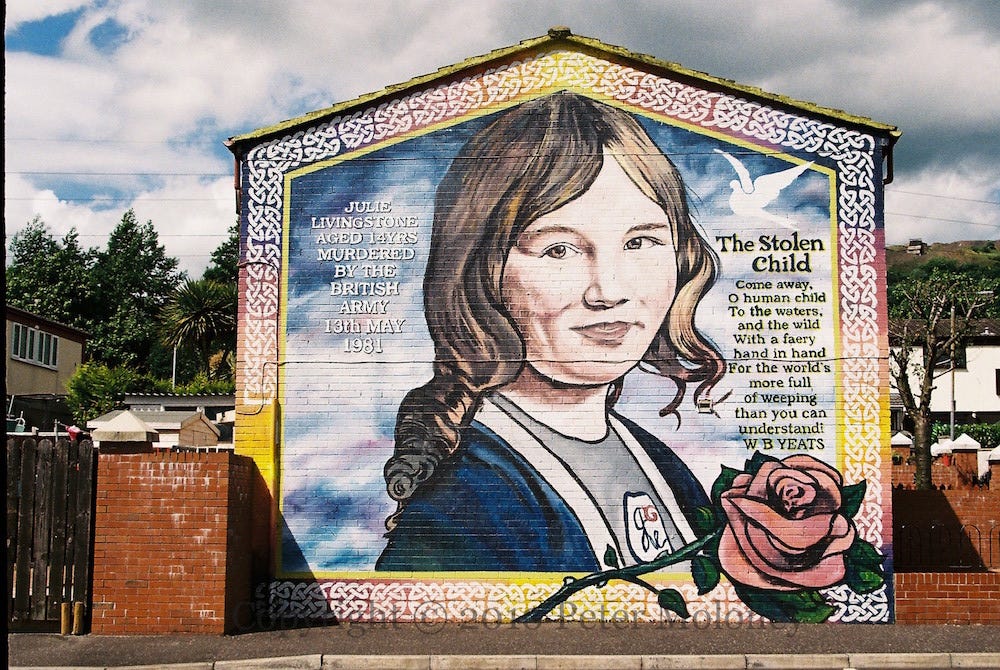
Julie Livingstone (14), a Catholic teenager, was shot and killed by a plastic bullet fired by the British Army. She had been walking along Stewartstown Road in the Suffolk area of Belfast.
May 16th.
The UFF claimed responsibility for killing Catholic civilian Patrick Martin (38) at his home on Abbeydale Parade, Belfast.
May 21st.
The INLA fired several shots at RUC officers at the Springfield Road RUC station, Belfast.
May 22nd.
Henry Duffy (45), a Catholic civilian, was shot and killed by a plastic bullet fired by the British Army as he walked through the Bogside area of Derry.
Carol Anne Kelly (12), a Catholic girl, died three days after being shot by a plastic bullet by the British Army as she walked along Cherry Park in the Twinbrook area of Belfast.
May 23rd.
Joseph Lynch (33), a Catholic civilian, was killed during a street disturbance involving members of the RUC at the junction of Oldpark Road and Gracehill Street, Belfast.
May 25th.
UDR soldier Thomas Ritchie (28) was shot and killed by an IRA sniper while on patrol in Gulladuff, near Maghera.
May 28th.
Charles Maguire (20) and George McBrearty (24), both members of the IRA, were shot and killed as they approached a car on the Lone Moor Road in Derry. The car contained undercover members of the British Army.
RUC member Mervyn Robinson (46) was shot dead by the IRA near Bessbrook, County Armagh.
May 31st.
RUC officer Colin Dunlop (30) was shot and killed by the IRA while guarding a patient at the Royal Victoria Hospital, Belfast.
If you’d like to support the newsletter, why not buy me a ☕️ ?
Bombings in May 1981
May 7th.
INLA volunteer James (Jim) Power (21) was killed in a premature bomb explosion at a house on Friendly Street in the Market area of Belfast. The device was intended to be used against a British Army patrol and was being defused after the opportunity passed.
May 8th.
The IRA claimed responsibility for firing ten mortars at the Newtownhamilton British Army base. Two British soldiers were injured.
May 9th.
The IRA exploded a bomb at an oil terminal in the Shetland Islands. A quarter of a mile away, at that time, the Queen was attending a function to mark the official opening of the terminal.
May 14th.
RUC officer Samuel Vallely (23) was killed when his patrol vehicle was hit by an IRA rocket on Springfield Road, Belfast. The rocket had been fired through the roof of the vehicle as it was driving along the road.
May 19th.
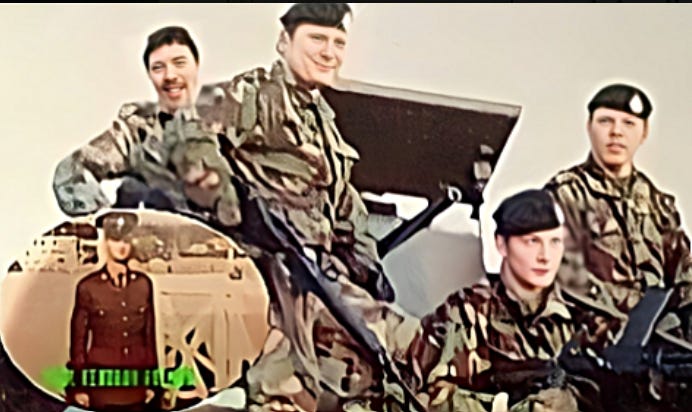
Two British Army Saracen armoured vehicles were travelling along Chancellors Road in the rural area of Altnaveigh, west of Newry. The IRA had planted a 1,000-pound (450 kg) landmine in a culvert underneath the road. When the second vehicle passed the spot, the landmine was detonated by radio remote control. The blast destroyed the vehicle, hurled its wrecked engine over the nearby Belfast–Dublin railway line, and left a large crater in the road. The five soldiers in the vehicle were killed outright. They were Paul Bulman (19), Michael Bagshaw (25), Andrew Gavin (19), John King (20) and Grenville Winstone (27). All belonged to the Royal Green Jackets, except driver Paul Bulman of the Royal Corps of Transport. It was the deadliest attack on the British Army since the Warrenpoint ambush. The security forces sealed off the area around the wrecked vehicle and spent several hours searching for possible further bombs before removing the bodies. Helicopters and a spotter plane scoured the countryside for the IRA unit involved. The IRA’s South Armagh Brigade claimed responsibility for the attack. It said: “British soldiers should realise that the English public and the English politicians do not give a damn about their lives. You are fighting a war which you cannot win”. It is believed the attack was meant to mark the ongoing hunger strike of Raymond McCreesh, from nearby Camlough. McCreesh died on hunger strike two days later.
May 23rd.
Two British soldiers were injured when a British Army armoured vehicle was hit by a rocket-propelled grenade fired by an IRA unit at Andersonstown, Belfast.
May 29th.
The INLA claimed responsibility for an unexploded bomb found at Fianna Fáil headquarters in Castleblayney, County Monaghan, not long before Taoiseach Charles Haughey was due to arrive. The bomb was unprimed and was a warning over Haughey’s alleged inactivity on the Hunger Strike issue.
May 31st.
British soldier Michael O’Neill (34) was killed by a booby trap bomb in an abandoned car, Drumalane Road in Newry, County Down.
Thanks very much for reading. I hope you found it interesting and will come back on Thursday!
I appreciate everyone who recently clicked the heart icon ❤️ at the bottom. It makes it easier for others to find this newsletter.
Thanks for the support!
If you’d like to let me know what you think of today’s instalment, please comment below.
Some recommended reading based on research for this instalment.
Lost Lives: The Stories of the Men, Women and Children Who Died as a Result of the Northern Ireland Troubles by David McKittrick, Chris Thornton, Seamus Kelters and Brian Feeney.