March 1985: Discrimination Against Sinn Féin?
A single month can hold both global turning points and the quieter, grinding tensions of a local conflict. In March 1985, as Northern Ireland moved through another fraught chapter of the Troubles, the wider world was confronting a different kind of fear: the Pentagon publicly acknowledged that a nuclear exchange could trigger a catastrophic “nuclear winter”, a stark reminder of how fragile global stability had become. Against this backdrop of existential anxiety, the events unfolding in Northern Ireland - street-level violence, political stalemate, and communities living under constant strain - felt like part of a much larger story: a world wrestling with the consequences of division, brinkmanship, and the human cost of unresolved conflict.
Political Developments in March 1985
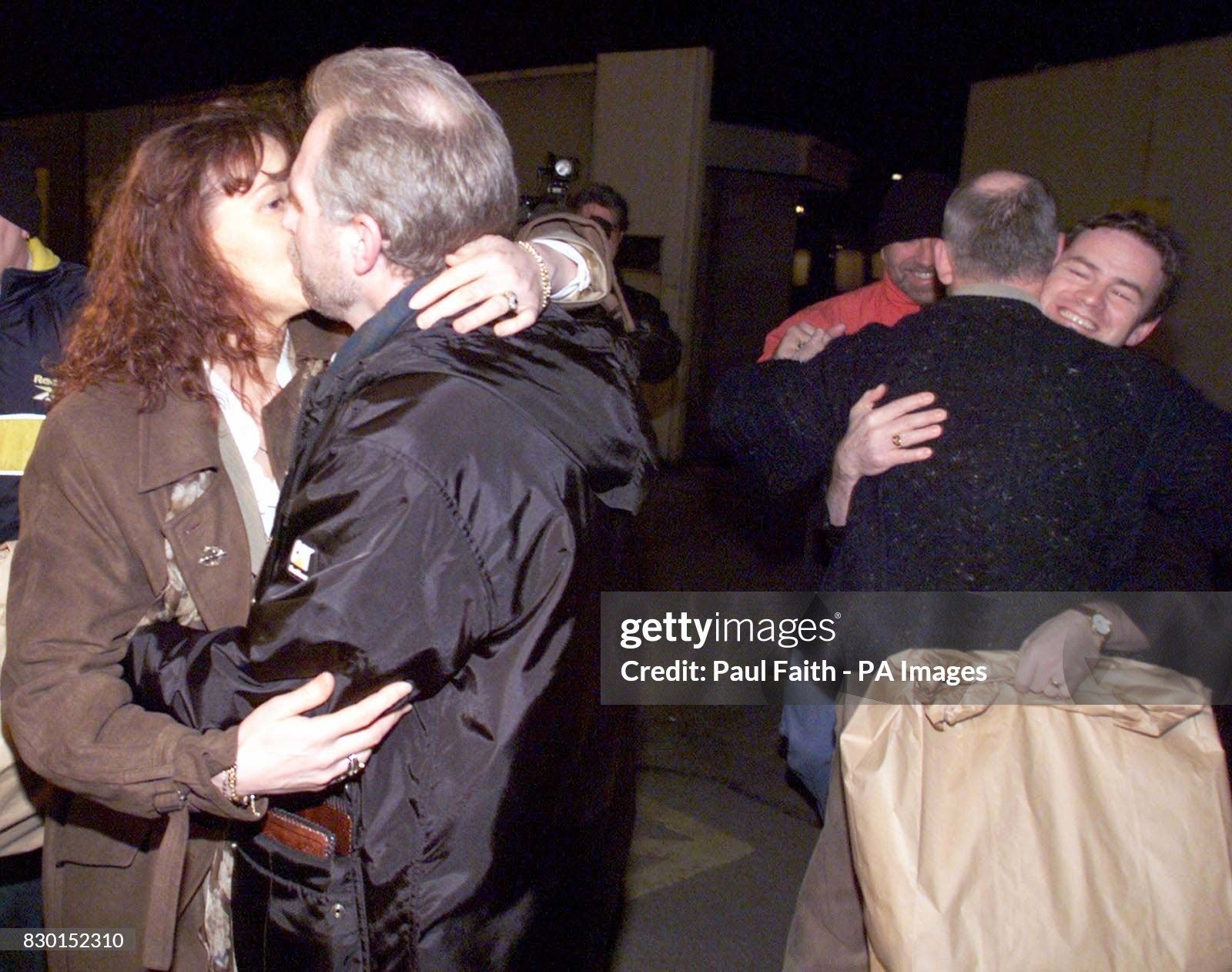
March opened with the sentencing of two Provisional IRA members, Paul Kavanagh and Thomas Quigley, on the 7th. Both men were found guilty of directing the 1981 London bombing campaign, which killed three people: civilian Nora Field, teenager John Breslin, and Metropolitan Police bomb disposal officer Kenneth Howorth. They received multiple life sentences with a recommended minimum of 35 years, though both would ultimately be released early in 1999 under the terms of the Good Friday Agreement.
The following day, on the 8th of March, a government note was published outlining policy on official contacts with Sinn Féin. A development made more significant by the party’s growing electoral presence in Northern Ireland. The note stated:
CONTACTS WITH SINN FEIN - POLICY AFTER MAY 1985
Introduction
1. This submission considers the implications for Government policy on Ministerial and official contacts with Sinn Féin of a significantly increased number of Sinn Féin councillors after the May 1985 district council elections. The review was commissioned by PUS on 19 September in the narrower context of the mistaken invitation of Mr Gerry Adams to an IDB reception. It takes account of the conclusions of an inter-departmental group endorsed by Mr Patten; the views of the Political Development Group, and consideration of the controversy surrounding Dr Boyson’s meeting with the Belfast City Council Gas Committee on 5 November. The following advice thus reflects a consensus of opinion among NI Permanent Secretaries and the Northern Ireland Office, including Mr Bickham, although there are different emphases on the practicalities of implementing the policy. Given the complexity of the subject, the Secretary of State might find it helpful to discuss with Ministerial colleagues and officials.
Policy Principles
2. The present policy on contacts with Sinn Féin stems from the principle that the Government rejects the use of violence as a means of furthering political ends. Accordingly, Ministers will have no personal dealings with Sinn Féin, unless and until Sinn Féin renounces support for the use of violence. This attitude signals support for parties who use the democratic process, and especially for the SDLP, who compete for the nationalist vote. It falls short of proscription, which, although desired by unionists, would be counterproductive. Thus, Sinn Féin is a legal political party, and a substantial number of people elect its members to public offices. The Government has a duty to deal fairly with the interests of their constituents as individuals and through the efficient administration of local government. An effective relationship with the latter also benefits those who vote for the constitutional parties. Present guidelines on correspondence and meetings between Ministers or officials and Sinn Féin, against which specific cases are considered, flow from this general policy.
Possible Scenario after May
3. The likely increase in Sinn Féin representation after the elections and its impact on local government were analysed in the note attached to Mr Patten’s minute of 15 October 1984 to the Secretary of State (copy attached as Appendix 1). The conclusion then was that the number of seats held by Sinn Féin would increase from 3 to 55-60. More recent assessments suggest that 45-50 seats is more likely. Nevertheless, on some councils west of the Bann, they might become the largest nationalist party. It is possible that two councils could have Sinn Féin chairmen. Some Sinn Féin councillors may well be elected council deputy chairmen or chairmen of committees. The larger number of Sinn Féin councillors is likely to disrupt what cross-community cooperation remains in local government: it will further antagonise unionists. But particular problems will be posed for the SDLP. Sinn Féin will almost certainly hold the balance of power in many of the presently nationalist controlled councils. If so, the SDLP will be forced to choose between cooperation with Sinn Féin and handing power to unionist parties. The SDLP are already aware of this dilemma and are divided. Gerry Adams highlighted it in the wake of Mr Hume’s abortive meeting with the Provisional IRA.
4. There will be problems for central government. Ministers and officials are likely to encounter Sinn Féin councillors, some of them as council office holders, during visits to councils, in council delegations and at site meetings. Although it has been relatively straightforward to apply the present policy to one MP, 5 Assembly Members and 3 district councillors, it will be more difficult to maintain consistency towards a much greater number. Sinn Féin and the SDLP will not be alone in paying close attention to the Government’s stance. As Mr McCusker’s present series of PQs show, the UUP and DUP will be watching for a change of position. They will point out that Ministers refuse to meet Sinn Féin but expect unionist councillors to work with them.
5. The choice between adhering to or relaxing the principles of the present policy cannot be avoided. We recommend that there should be no change. To do so because of changed electoral fortune would undermine the constitutional parties and boost Sinn Féin and the Provisional IRA. It would be perceived by unionists, and by some opinion at Westminster, as a weakening of the government’s resolve to resist terrorism. But while the principles remain valid, their practical implementation may have to be modified to match the different circumstances after the elections. The rest of this submission considers what this might involve.
Ministerial Contacts
6. Ministerial visits to councils raise complex problems. In recent years, Ministers, particularly those responsible for the Department of the Environment, have developed a practice of regular visits to enable consultation with local representatives. They have not thought it necessary to avoid visiting councils simply because they include Sinn Féin councillors. But after May, Sinn Féin is likely to be represented on at least 13, and possibly 19, councils. If Ministers go to these councils, it would be very difficult to avoid some contact with Sinn Féin members, including, for instance, answering questions on local matters. Particular difficulties could arise if a Minister were invited to meet a council or a council committee with a Sinn Féin chairman (or if a Sinn Féin vice-chairman were to deputise unexpectedly and at short notice for an SDLP chairman).
7. Ministers will not wish to be seen to fraternise with Sinn Féin chairmen or office holders. While it might be argued that it is possible to draw a distinction between a representative office (mayor, chairman, or vice-chairman) and the office-holder, the subtlety of this distinction would be lost on most local observers. Sinn Féin would seek to make publicity out of encounters with Ministers, and public, especially unionist, reactions would be hostile. But the rejection of those elected by the majority of residents of an area would be liable to be exploited by Sinn Féin as a grievance both at home and abroad. And if Ministers were to refuse absolutely to visit Councils with Sinn Fein members or office holders, they would penalise other councillors and would be in danger of treating the council as a whole - and its electorate - less favourably than other councils. They would also limit the range of local opinion which they currently hear.
8. We therefore recommend that Ministers should continue to be prepared to visit District Councils with Sinn Féin members. If a council has a Sinn Féin chairman, visits might be kept to a minimum. But each visit would have to be carefully considered in current circumstances, and it would be desirable for Ministers to consult the Secretary of State before finalising arrangements. During visits, Ministers will wish to ensure that any contact with Sinn Féin members is kept to the minimum and does not stray outside Council responsibilities. Public presentation will be very important, and guidance, based on careful reconnaissance, will need to be produced on, for example, advance identification of Sinn Féin councillors, the handling of photocalls and the stage-managing of visits generally. As to individual courtesies, such as handshakes, we think that this must be left to the Minister’s (or official’s) discretion. Personal snubs are usually counterproductive. Moreover, however careful the preparation, it may not in practice be possible for Ministers always to know whether they are talking to a Sinn Féin member.
9. Sinn Féin Councillors may be present at events, e.g., the opening of new buildings organised by the council, to which Ministers are invited. As district council representatives, they may appear at events organised by Area Boards or other bodies. If Ministers were to adopt a blanket policy of refusing to attend such occasions, this would in effect give Sinn Féin a power of veto over Ministerial activity, which they would undoubtedly exploit. We recommend that, as a general rule, Ministers should be prepared to accept invitations to such events irrespective of whether Sinn Féin councillors will be present, but that they should not attend if the principal host were expected to be a Sinn Féin representative.
10. At present, Ministers decline requests for meetings with Sinn Féin elected representatives, whether on their own or as part of a larger delegation with other parties. Considerable publicity was given to Dr Boyson’s refusal to meet the Sinn Féin members of Belfast City Council Gas Committee. In its wake, the SDLP leadership refused to support Sinn Féin’s claims to meet Ministers and denied that there would be any alignment with Sinn Féin in district councils. If Ministers changed their policy, then this position, which is already under considerable pressure within the party (and that of the Irish Government) would be undermined. In addition, there would be adverse reaction among unionists and opinion in Great Britain.
11. Correspondence from elected representatives of Sinn Féin does not receive a Ministerial reply, but a curt, formal and short Private Secretary letter. Where genuine problems are raised, these are dealt with fairly and adequately in the interests of the constituent. There is no reason to alter this practice, even where a Sinn Féin councillor holds an official council position.
Official Contacts
12. At present, personal contact between officials and Sinn Féin elected representatives is avoided, except where direct approaches are made on constituency matters. These are dealt with at local level in the same way as for other MPs or Assembly members. Officials are instructed that in the case of any approaches that go beyond constituency business, they should seek advice from Private Office. The aim is to restrict policy issues to correspondence. The UUP have begun to criticise such contacts as part of its campaign to force the Government to proscribe Sinn Féin, but it would be wrong, and all the more impracticable post-May, to be more restrictive. There would be practical difficulties in requiring local offices, some of which are in sensitive areas, to adopt a strict “no contact” approach. More importantly, the Government would be vulnerable to legal claims that they were discriminating against Sinn Féin elected representatives’ constituents on political grounds (see para. 14).
13. However, if Sinn Féin councillors were to hold committee chairmanships, then the thin line between constituency matters and wider policy issues could become blurred. Indeed, already on 6 occasions when DOE officials have met Omagh Council or its Planning Committee, a Sinn Féin councillor has been present. The indications are that Sinn Féin would try to become more influential and would take a high profile. A Sinn Féin chairman of a council recreation committee, for instance, would expect to discuss with senior officials a major project within his area. To refuse all such contact would risk undermining the conduct of good government and lay officials open to accusations of discrimination and of less favourable treatment of some councils than of others. Such contacts at official level are therefore unavoidable, particularly where, as in DOE, some services are administered on a decentralised basis, and officials of up to Assistant Secretary level and equivalent may be involved in routine meetings with District Councils. We recommend that the general rule should be that:
(a) officials who are locally based should continue as at present to have freedom to liaise with district councils and individual councillors on matters within the council’s direct responsibilities and on any constituency matters which councillors may raise. This would apply irrespective of the political complexion of the council.
(b) senior headquarter officials (Assistant Secretary and above) would not receive deputations which included Sinn Féin councillors, save in the very exceptional circumstances where such contact was essential for fair administration. Nor would they pay site visits to councils where it was known that a Sinn Féin councillor would be the main spokesman (e.g., as chairman of a recreation committee) unless
(i) the subject matter was within the specific responsibilities of the council or council committee concerned, and
(ii) the interests of fair government and of the equitable treatment of the council and the area as a whole required personal contact rather than correspondence.
Minister’s authority would be sought for proposed meetings of this sort.
Legal Position
14. In addition to the political sensitivities, there are legal pitfalls. Care should be taken not to draw a false distinction between Ministers and officials - legally, officials act in the name of Ministers. Care is also required to give no grounds for a complaint of maladministration to the Parliamentary Commissioner of Administration, or a claim of discrimination on the grounds of political affiliation under section 19 of the Northern Ireland Constitution Act 1973. This is why genuine constituency complaints continue to receive a fair and adequate reply. It is also important to emphasise that the Government’s policy is determined, not by Sinn Féin’s political aims, but by its support for violence.
Presentation
15. This issue will attract attention in the run-up to and especially following the May elections. The Government will have to tread a clear path between taking a firm line against Sinn Féin as an advocate of violence, which should help the SDLP, and creating a situation after the election in which Sinn Féin can too easily disrupt the relationship between central and local government. The Irish Government will be alert. They do not have the same difficulties, since there are relatively few Sinn Féin local councillors in the Republic. But they would be very critical if they felt that we were softening our approach in advance of the elections. After then, much will depend on how the SDLP behave with Sinn Féin in the councils. There might be a case for the Secretary of State talking privately to Mr Hume about probable SDLP tactics.
16. It is for decision whether the Government’s approach should be announced in advance of the May elections, perhaps through an arranged Written PQ along the lines of Appendix 11. But, however carefully we try to devise sustainable arrangements now, it is scarcely possible to foresee all eventualities. This suggests that while the Government should be robust when questioned, as it surely will be, there is little to be said for an unsolicited announcement. Moreover, to go on the offensive in that way would appear, paradoxically, too defensive, and might be seen as exposing concern at Sinn Féin’s likely tally in May. To make a public high-key declaration of our intentions would risk handing Sinn Féin an election issue and perhaps make more difficulties for the SDLP leadership in their efforts to avoid their party being caught up in compacts with Sinn Féin. I suggest that Ministers keep the material in the attached draft PQ to hand for use when questioned. As May approaches, it makes sense to tell the Irish Government, probably through diplomatic channels, what line we propose to take.
Conclusion
17. The present policy will remain valid after May 1985. But it will be more difficult to implement. Ministers will be more likely to meet Sinn Féin councillors on visits, and more meetings may be necessary between senior officials and council delegations, which include Sinn Féin representatives. Individual cases will need to be considered by Ministers against the Government’s overall policy. Careful consideration will have to be given to presentation of that policy and practice.
18. If the approach in this note and its conclusions are agreed, officials will examine the effect of increased Sinn Féin membership on district councils’ relations with Area Boards, the Housing Executive and other non-Departmental public bodies; and on district councils’ powers of patronage. Particular difficulty may arise with appointments to Area Health and Education Boards, where there are statutory provisions for District Council representation. Nominations to the Education Boards are made direct from individual District Councils. As Ministers have no discretion, the appointment of a Sinn Féin nominee cannot be ruled out. Nominations to the Health Boards are also made by councils, but a greater degree of discretion in making the appointment is a theoretical possibility. Detailed guidance for Northern Ireland Departments will also be prepared, and Whitehall Departments will also need to be brought up to date.
On the 22nd, it was announced that Robert Pascoe would succeed Robert Richardson as the British Army’s General Officer Commanding in Northern Ireland, with the change due to take effect in June 1985.
The next day, the DUP held its annual conference in Castlereagh, East Belfast. In his keynote speech, party leader Ian Paisley accused the Irish government, the SDLP, and the Catholic hierarchy of holding a vested interest in IRA violence. His remarks came amid fierce unionist opposition to the emerging Anglo‑Irish Agreement, a period in which Paisley was also promoting his “Smash Sinn Féin” campaign.
During March, Sinn Féin alleged that the INLA were responsible for the kidnapping of a publican’s daughter in Derry. She was released after the IRA threatened to shoot those responsible.
Tales of the Troubles is a reader‑supported publication. Thousands read it — but only subscribers get every instalment, every detail, every story as it lands. Don’t be the one hearing about it second‑hand.
Shootings in March 1985
March 3rd.
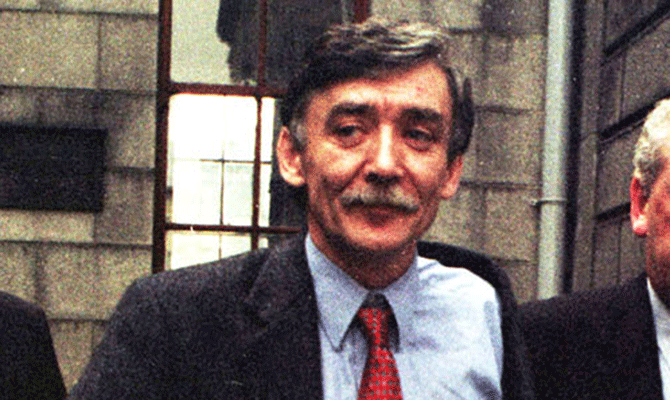
RUC officer Hugh McCormac (40) was shot and killed by the IRA outside St Gabriel’s Roman Catholic Church in Graan, near Enniskillen. The officer was exiting his vehicle when he was hit by a number of bullets. As he lay wounded, a gunman ran up and fired several shots into him at point-blank range.
March 6th.
The INLA attempted to kill a UDR soldier in the area of Strabane, County Tyrone.
March 14th.
Former senior IRSP/INLA member Harry Flynn was shot in the leg in Dublin. It’s believed the shooting was part of an internal dispute.
March 23rd.
Alleged Garda informant John Corcoran (45) was shot and killed by the IRA at Ballincollig in County Cork. Sean O’Callaghan, a Garda informant himself, claimed in an interview with a local newspaper that he had shot the man but later retracted this.
March 29th.
RUC reservist John Bell (34) was shot and killed by the IRA while working in a garage on Church Square in Rathfriland, County Down. Two gunmen approached him and shot him three times at point-blank range before escaping.
If you’d like to support the newsletter, why not buy me a ☕️ ?
Bombings in March 1985
March 12th.
An IRA bomb attack in Newry town centre caused £100,000 worth of damage.
March 27th.
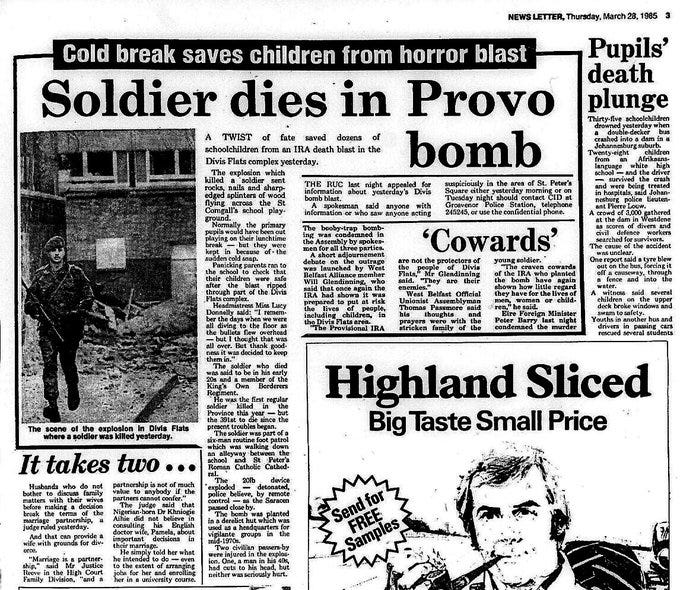
British soldier Anthony Dacre (25) was killed in an IRA bomb attack while patrolling Divis Flats in Belfast. The killing was strongly condemned by the Irish government due to the fact that the attack took place in the centre of a heavily populated high-rise flat complex.
Thanks very much for reading. I hope you found it interesting and will come back on Tuesday!
I appreciate everyone who recently clicked the heart icon ❤️ at the bottom. It makes it easier for others to find this newsletter.
Thanks for the support!
If you’d like to let me know what you think of today’s instalment, please comment below.
Some recommended reading based on research for this instalment.
Lost Lives: The Stories of the Men, Women and Children Who Died as a Result of the Northern Ireland Troubles by David McKittrick, Chris Thornton, Seamus Kelters and Brian Feeney.