December 1985: Supergrass
December 1985 opened against a world shifting in ways both subtle and seismic. In Geneva, Ronald Reagan and Mikhail Gorbachev had just concluded their first summit, signalling a tentative thaw in the Cold War and raising cautious hopes that decades of superpower tension might finally be easing. Yet while global leaders spoke of dialogue and de‑escalation, Northern Ireland was entering one of its most volatile months in years. The Anglo‑Irish Agreement, signed only weeks earlier, had ignited a political firestorm, and December would expose the depth of the fracture it created. What unfolded over the following weeks was a cascade of resignations, protests, courtroom reckonings, and political realignments that revealed just how far the Agreement had unsettled the foundations of Northern Irish politics.
Political Developments in December 1985
December 1985 unfolded as one of the most politically charged months of the Troubles, shaped at every turn by the deepening fallout from the Anglo‑Irish Agreement. The month opened with an unusual moment of contrition on the 3rd of December, when Secretary of State Tom King publicly expressed regret for remarks he had made in Brussels suggesting that the Irish government accepted a united Ireland would never happen. His clarification did little to ease tensions, but it set the tone for a month defined by political strain and public protest.
Two days later, Unionist members of the Northern Ireland Assembly moved to consolidate their opposition to the Agreement by establishing a Grand Committee tasked with scrutinising its impact across government departments. The following day brought further upheaval. The Alliance Party announced its withdrawal from the Assembly, a symbolic blow to an institution already under severe pressure. That same day, the new Inter‑Governmental Conference created under the Anglo‑Irish Agreement met for the first time. Outside, anger spilled onto the streets as Protestant workers from several Belfast firms staged walk‑outs and marched to Maryfield, home of the Anglo‑Irish Secretariat. Violent clashes erupted between demonstrators and the Royal Ulster Constabulary, leaving 38 officers injured and underscoring the depth of Loyalist hostility to the new political arrangements.
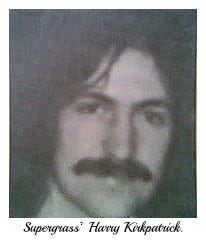
The political crisis intensified further on the 17th of December, when all 15 Unionist Members of Parliament resigned their Westminster seats in a coordinated protest designed to force by‑elections and demonstrate the scale of opposition to the Agreement. The next day, the courts delivered a very different kind of milestone: twenty‑five people were sentenced on the evidence of INLA ‘supergrass’ Harry Kirkpatrick, marking the final chapter of the controversial supergrass system. The trials, long criticised for relying on uncorroborated testimony from incentivised informers, had already seen several convictions overturned, and their end signalled a shift in how the state pursued paramilitary prosecutions.
The month closed on the 21st of December with a development from the Republic of Ireland, where Des O’Malley broke from Fianna Fáil to establish a new political party, the Progressive Democrats. Though rooted in southern politics, the move added another layer to a month in which constitutional questions, political realignments, and public unrest intertwined across the island.
Tales of the Troubles is a reader‑supported publication. Thousands read it — but only subscribers get every instalment, every detail, every story as it lands. Don’t be the one hearing about it second‑hand.
Shootings in December 1985
December 7th.
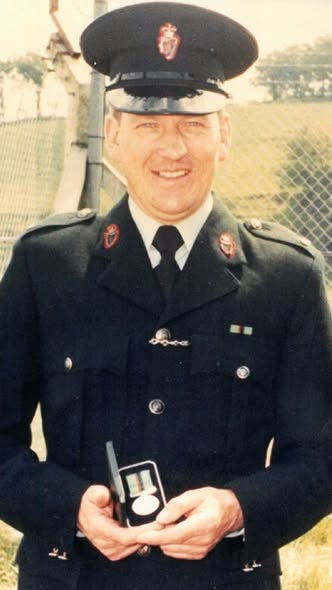
The IRA launched an assault on the RUC station in Ballygawley, County Tyrone, in which RUC officers Reserve Constable William Clements (52) and Constable George Gilliland (34) were shot and killed, and the barracks destroyed.
December 9th.
IRA members in a car fired several bursts of automatic gunfire at the RUC base in Castledawson, County Londonderry. There were no reported injuries.
If you’d like to support the newsletter, why not buy me a ☕️ ?
Bombings in December 1985
December 6th.
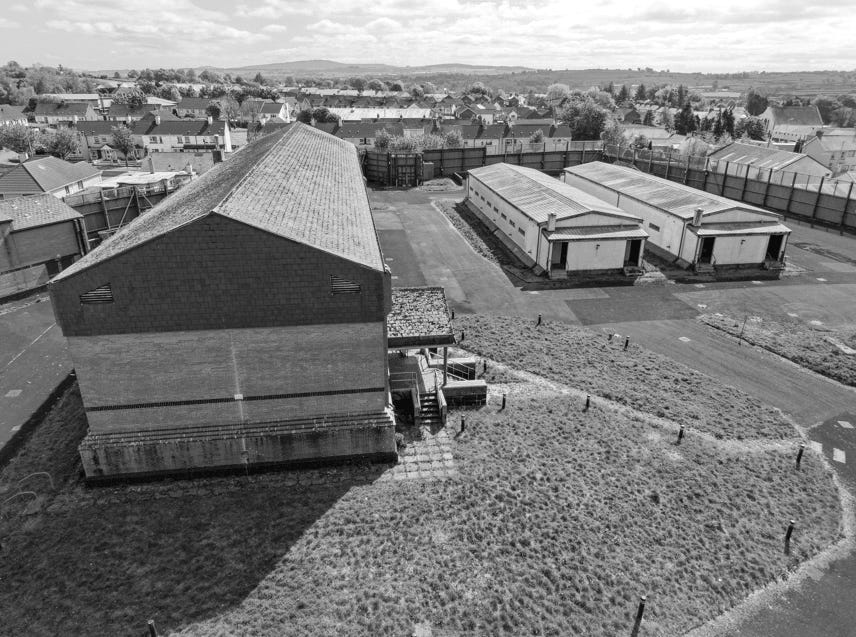
A 500 lb (230 kg) IRA bomb heavily damaged an RUC station at Toome, County Antrim.
December 11th.
The IRA claimed responsibility for a mortar attack on an RUC base at Tynan, County Armagh, in which four RUC officers were injured.
December 19th.
The RUC base in Castlederg, County Tyrone, was wrecked by a shell during a mortar attack carried out by the IRA. Seven people were injured, and about 250 families evacuated.
December 22nd.
The IRA’s East Tyrone Brigade carried out a mortar attack on Carrickmore’s joint RUC & British Army base. Minor damage was caused to the base by a mortar shell and one soldier was injured.
Thanks very much for reading. I hope you found it interesting and will come back on Tuesday!
I appreciate everyone who recently clicked the heart icon ❤️ at the bottom. It makes it easier for others to find this newsletter.
Thanks for the support!
If you’d like to let me know what you think of today’s instalment, please comment below.
Some recommended reading based on research for this instalment.
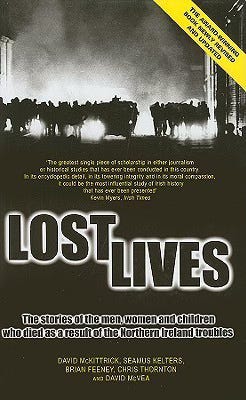
Lost Lives: The Stories of the Men, Women and Children Who Died as a Result of the Northern Ireland Troubles by David McKittrick, Chris Thornton, Seamus Kelters and Brian Feeney.